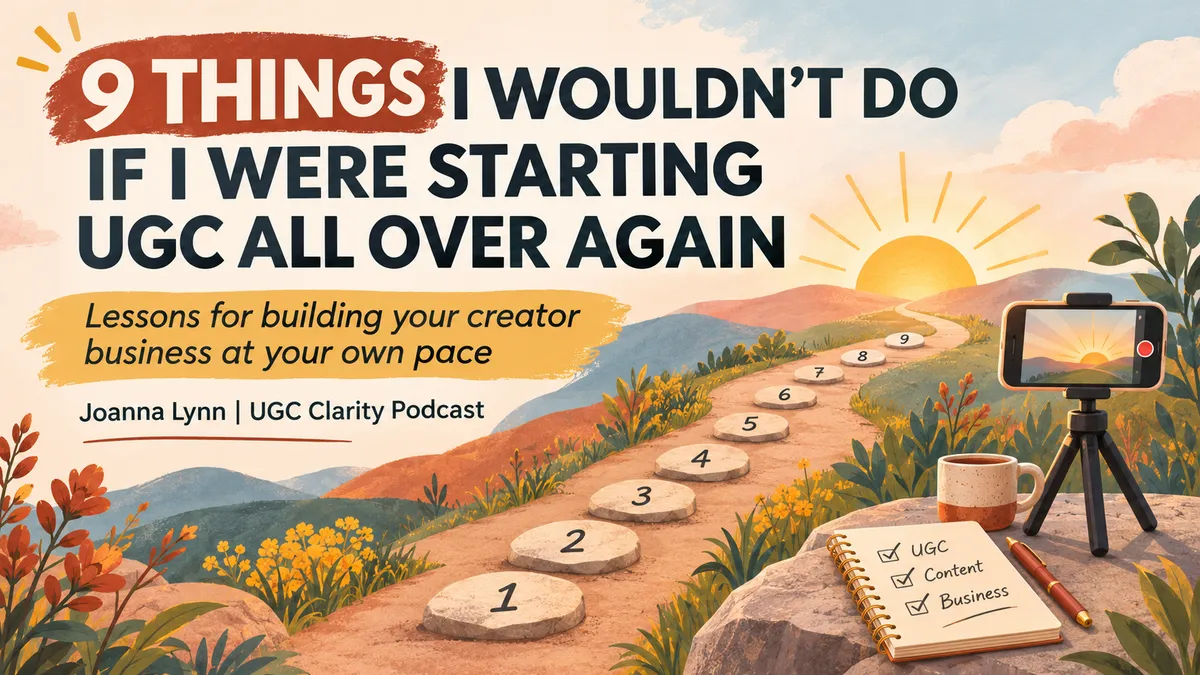
9 Things I Wouldn’t Do If I Were Starting UGC All Over Again What I’ve learned about building a creator business, taking action, and giving yourself room to grow
“The goal isn’t to beat everyone else. The goal is to build a business that works for you.”
-Joanna Lynn
There are a lot of videos online telling you how much money people are making with UGC.
“I made $10,000 in my first month.”
“I quit my 9-to-5.”
“I replaced my full-time income.”
And don’t get me wrong. Some creators really have done those things.
But what we don’t always hear about is everything that happened before they got there.
The learning.
The rejection.
The months when nothing seemed to happen.
The mistakes, the trial and error, and all the times they had to figure things out along the way.
When you’re just getting started, it’s easy to see someone else’s success and think that’s how quickly it’s supposed to happen for you, too.
Then when it doesn’t, you start wondering what you’re doing wrong.
So today, I want to share nine things I personally wouldn’t do if I were starting my UGC journey all over again.
These aren’t rules you have to follow. They’re things I’ve learned that can help you build your business with realistic expectations and a little less pressure.
1. I Wouldn’t Quit the Income That’s Paying My Bills
This is probably the biggest one on my list.
If you have a job, another freelance business, or something else bringing in consistent income, I wouldn’t walk away from it just because you hope UGC will replace it.
Notice I said hope.
UGC is a form of freelancing, and while freelancing can be incredible, the income can also be unpredictable.
Some months you might book several clients. Other months, your inbox might feel a little too quiet.
And the last thing I want is for you to feel like every pitch you send has to turn into money because your rent depends on it.
That kind of pressure can make it harder to turn down an opportunity that doesn’t feel right. It can also make you feel like you have to accept less than you want because you need the money right now.
Instead, let your current income support you while you build.
Work on your UGC business in the evenings, on weekends, or in whatever pockets of time make sense for your life.
Then give yourself time to see whether your UGC income is consistently supporting your needs before making a decision about leaving your other income behind.
2. I Wouldn’t Compare My Timeline to Someone Else’s
You open Facebook or TikTok and see someone celebrating their first $1,000 client.
Then someone else shares that they booked 20 brand deals.
Before you know it, you’re looking at your own journey and thinking, “What am I doing wrong?”
The answer might be nothing.
We don’t always know what happened before someone shared that big win.
Maybe they’ve been creating content for years. Maybe they had marketing experience. Maybe they’ve been pitching for months and are only now sharing their first major opportunity.
Or maybe things really did happen quickly for them.
That happens, too.
But someone else’s timeline doesn’t determine what yours should look like.
And success doesn’t look the same for everyone.
One creator might want to build a full-time business. Another might be thrilled to bring in an extra $500 a month for their family.
Both are allowed to feel proud of what they’ve built.
Instead of comparing your numbers to someone else’s, look at your own progress.
Are you more comfortable on camera than you were a month ago?
Are your videos getting better?
Have you sent pitches you were once too nervous to send?
Those are wins, too.
3. I Wouldn’t Wait Until I Knew Everything
This one hits home for me because I know what it feels like to think, “I just need to learn one more thing.”
One more YouTube video.
One more podcast.
One more course.
One more day of research.
And learning is valuable. But sometimes learning can also become a comfortable place to hide.
Because as long as you’re learning, you don’t have to send the pitch yet.
You don’t have to film the video.
You don’t have to worry about hearing no.
But there isn’t a finish line where someone hands you a certificate saying you officially know everything you need to know about UGC.
And if you want one, I could probably make you one. 😂
Seriously, though, you’re going to learn a lot by actually doing the work.
Your first sample probably won’t be your best one. Mine wasn’t.
Your first pitch probably won’t be your strongest pitch, either.
That’s okay. Once you’ve created something, you have something you can improve.
You can learn, take action, and keep learning as you go.
4. I Wouldn’t Spend a Bunch of Money Before Making Any
I see this happen all the time.
Someone decides they want to become a UGC creator, and before they’ve filmed a single sample, they start shopping.
A new camera.
Professional lighting.
A microphone.
A backdrop.
A fancy editing program.
Before they know it, they’ve spent hundreds or even thousands of dollars and still haven’t created anything.
Now, I’m not saying those things aren’t nice to have. I have equipment now that I didn’t have when I started.
But you don’t have to buy your way into becoming a creator.
When I first started, I used what I had, and that was an iPhone 11.
If your phone records decent video, start there.
If you have a window with good natural light, start there.
If you have a quiet corner in your house, start there.
As your business grows, you can decide which upgrades will actually make a difference for you.
There’s something pretty satisfying about buying a new microphone because your creator business helped pay for it.
5. I Wouldn’t Buy Every Course, Coaching Program, or Template I Came Across
This might sound a little funny coming from someone who offers resources for creators, but I believe it.
You don’t need to buy everything to become a UGC creator.
Sometimes the problem isn’t that you don’t have enough information. It’s that you’re trying to learn from too many people at once.
One creator tells you to pitch one way. Someone else tells you never to do that. Another person has a completely different strategy that works for them.
Before long, you have 15 tabs open, a few courses you haven’t finished, and a notebook full of information.
And somehow, you feel more confused than when you started.
Education can be helpful. I’ve invested in learning throughout my own journey, and I don’t regret it.
But I’d encourage you to find guidance that makes sense for your goals, learn something, and then give yourself time to put it into practice.
Sometimes the thing that finally makes everything click is doing the work you’ve already learned how to do.
6. I Wouldn’t Ignore the Business Side of UGC
A lot of us get into UGC because we enjoy creating.
We like filming, editing, coming up with ideas, and bringing content to life.
Then the first contract lands in our inbox, and suddenly we’re looking at words like usage rights, exclusivity, licensing, and revisions.
It can feel intimidating.
I remember looking at contracts early on and wondering if I was supposed to already know what everything meant.
You’re not expected to know every term on day one.
But it’s important to start learning what you’re agreeing to.
Before you sign, look at things like:
What content are you delivering?
How many revisions are included?
Where can the brand use your content?
How long can they use it?
Are there any restrictions on working with other brands?
How and when will you be paid?
If you see something you don’t understand, stop and ask questions. You can also seek guidance from a qualified attorney when you need help with a contract.
You’re not just creating videos. You’re building a business, and learning how to protect your time and work is part of that.
7. I Wouldn’t Say Yes to Every Opportunity Just Because It’s an Opportunity
This one can be hard, especially when you’re new.
A brand reaches out, and you’re excited that someone noticed your work. I get it!
But before you say yes, take a moment to look at what the opportunity actually involves.
Does it help you build the kind of business you want?
Are you interested in the product or service?
Will it give you experience you’re looking for?
Does the compensation make sense for the work?
Or are you saying yes because you’re afraid another opportunity won’t come along?
I don’t believe every gifted collaboration, affiliate opportunity, or lower-paying project is automatically a bad decision.
What makes sense for a beginner might look different from what makes sense for an experienced creator. Your goals, your time, and the details of the agreement all matter.
The opportunities I accepted when I first started aren’t all the same opportunities I would accept today.
As your skills and experience grow, your rates and boundaries can grow, too.
8. I Wouldn’t Let Rejection Convince Me This Isn’t for Me
I wish someone had prepared me for how much rejection can be part of freelancing.
Some brands will say yes.
Some will say no.
And a lot of them won’t say anything at all.
You spend time finding the brand, writing the pitch, and hitting send. Then you check your inbox over and over.
Nothing.
It’s easy to start filling in the blanks yourself.
“Maybe my portfolio isn’t good enough.”
“Maybe they didn’t like my videos.”
“Maybe I’m not cut out for this.”
But most of the time, you don’t actually know why someone didn’t respond.
Maybe they already hired a creator. Maybe they don’t have room in their budget. Maybe the person you emailed is on vacation or never saw your message.
I’m not going to pretend rejection feels good, because it doesn’t.
But a no, or no response at all, doesn’t tell the whole story of what you’re capable of.
Keep improving your work, keep looking for opportunities, and give yourself the chance to find that next yes.
9. I Wouldn’t Try to Build My UGC Business Completely Alone
When you decide to become a UGC creator, there’s a good chance the people around you won’t fully understand what you’re doing.
To them, it might look like you’re just making videos or spending time on your phone.
They may not understand why a brand response is exciting or how much work went into putting your portfolio together.
And that doesn’t mean they’re bad people. They just might not see what you see yet.
I know what it feels like to be excited about something and realize the people around you don’t understand why it matters so much to you.
That’s one reason community can make such a difference.
It helps to have people who understand why your first paid collaboration is a big deal.
People who know how scary it can be to film your first talking-head video.
People who will celebrate with you when a brand finally responds to a pitch.
That’s one of the reasons I created the UGC Clarity Community.
I don’t have all the answers, but I know how much it can help to be around people who understand what you’re working toward.
Whether you find that support in my community or somewhere else, I hope you find your people.
You Don’t Have to Rush the Process
Building a business takes time.
Learning new skills takes time.
Getting comfortable putting yourself out there can take time, too.
Some creators book their first paid collaboration within a few weeks. Others take a few months or longer.
That timeline alone doesn’t determine whether you’re capable of building something successful.
Keep the income that supports you while you build. Take action before you feel completely ready. Learn the business side. Choose opportunities with intention. Find people who understand what you’re working toward.
And remember, you’re allowed to build this at a pace that works for your life.
🎧 Want to hear more? Listen to “9 Things I Wouldn’t Do If I Were Starting UGC All Over Again” on the UGC Clarity Podcast. Listen here.
💜 Looking for a place to ask questions, share your wins, and learn alongside other creators? Join the free UGC Clarity community here.
Share This Blog
Know someone who’s thinking about starting UGC? Share this post with them!